In the Space of Becoming: In Green, In White, an Old Chinese Story Told Anew
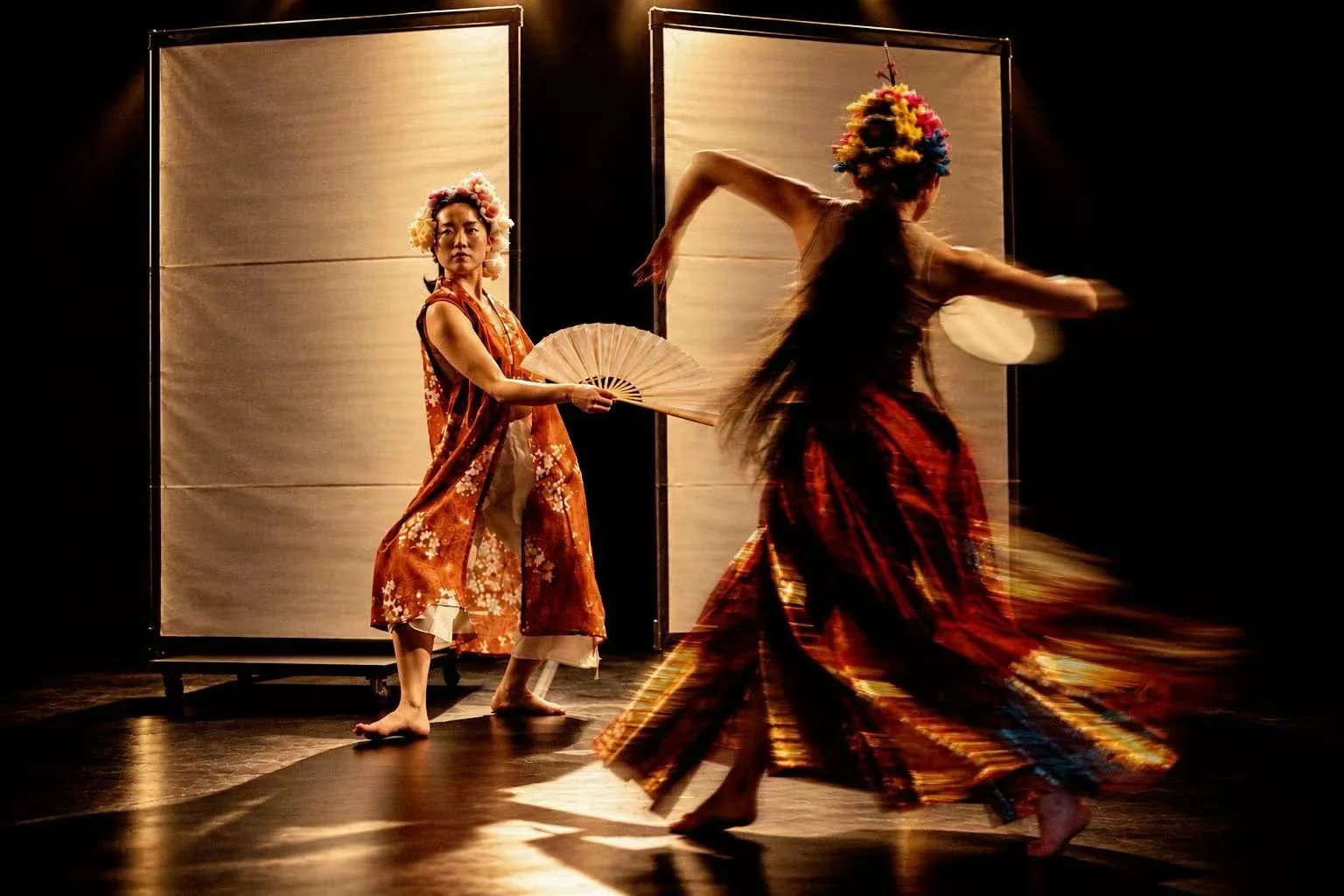
Choreographed by Weichen Cui
Performed by Weichen Cui and Jiawen Feng
2 October 2026
Melbourne Fringe 2026
Dancehouse, Sylvia Staehli Theatre, Naarm/Melbourne
Image by Urban Artistry
In Green, In White is such a rich and beautiful work — thoughtful, delicate and, at times, incredibly cute.
I loved how it began behind the screens, using silhouettes and light to evoke piying (皮影, Chinese shadow puppetry), accompanied by Xiqu (戏曲, also known as traditional Chinese opera). Piying, recognised by UNESCO as Intangible Cultural Heritage of Humanity, lends the opening a distinctive visual language of shadow, light and storytelling, while the sounds of Xiqu evoke a deeper cultural memory. Together, they immediately gave me the feeling of an old story being told, before the work gradually unfolded into something much more contemporary.
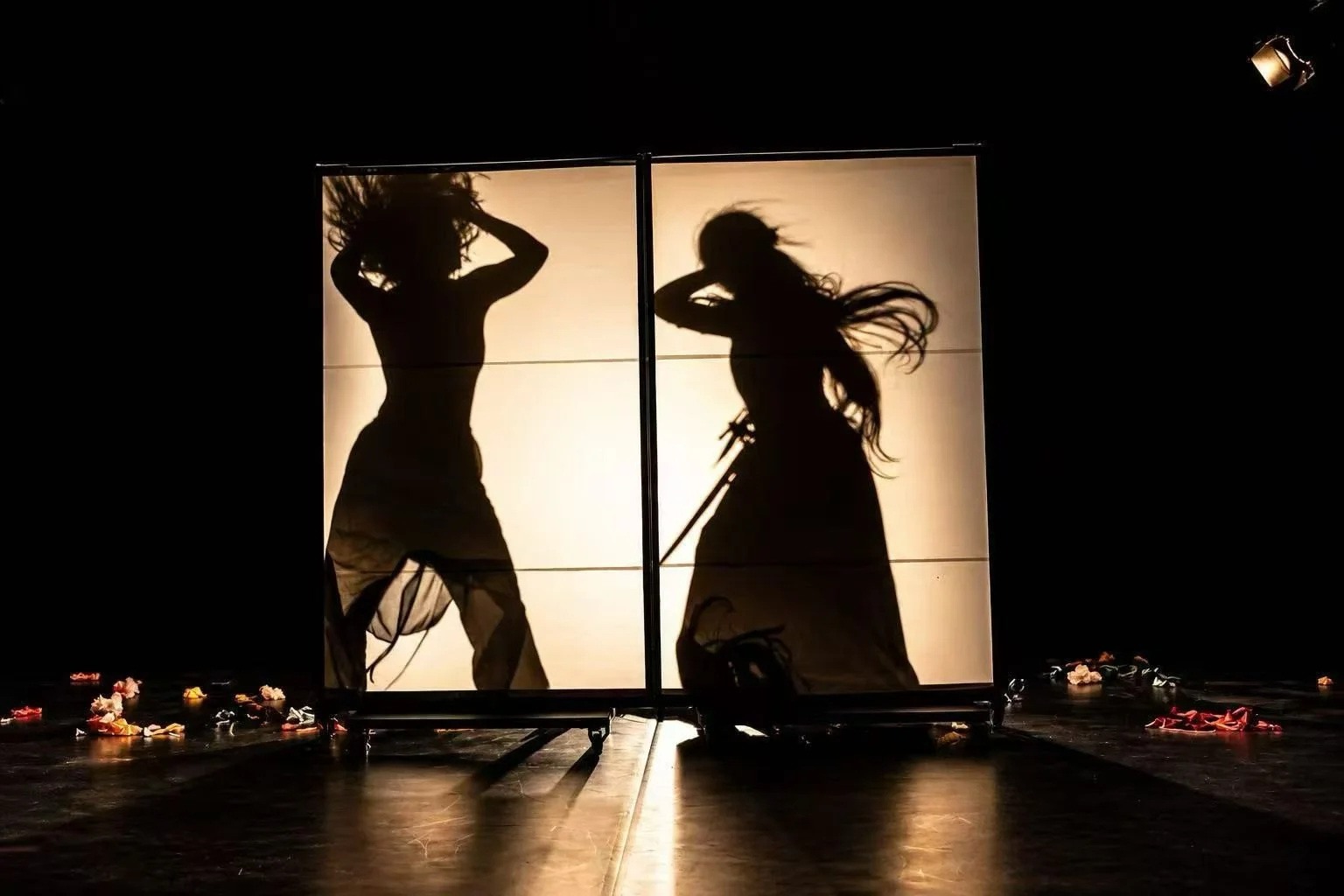
Image by Urban Artistry
One of my favourite parts was watching the yao (妖) learn to imitate human behaviour. Yao is a distinctly Chinese cultural and mythological being — not quite a ghost, monster, fairy or spirit, and difficult to translate neatly into any of these categories. In our cultural memory, yao often carries associations of danger, seduction and the uncanny: something alluring, supernatural and perhaps not entirely to be trusted. Yet what we encounter onstage is almost the opposite — a being that is awkward, innocent and earnestly trying to imitate humans. That contrast itself is incredibly moving.
Jiawen absolutely nailed this quality. The shifts in their gaze, gestures and physicality between the animal-like and the human were so precise, yet incredibly endearing. There was an almost animal innocence and curiosity to them — as if they were observing humans, trying out their gestures and behaviours and gradually learning the rules of their world.
And sometimes that innocence and longing made their efforts unexpectedly tender, even a little heartbreaking to watch. There was something about seeing them try so earnestly to take things into themselves that did not quite fit the shape of their own body or the way they instinctively moved and thought. The desire to imitate and belong was adorable, but there was also a quiet ache in watching them reshape themselves around something that was not naturally their own.
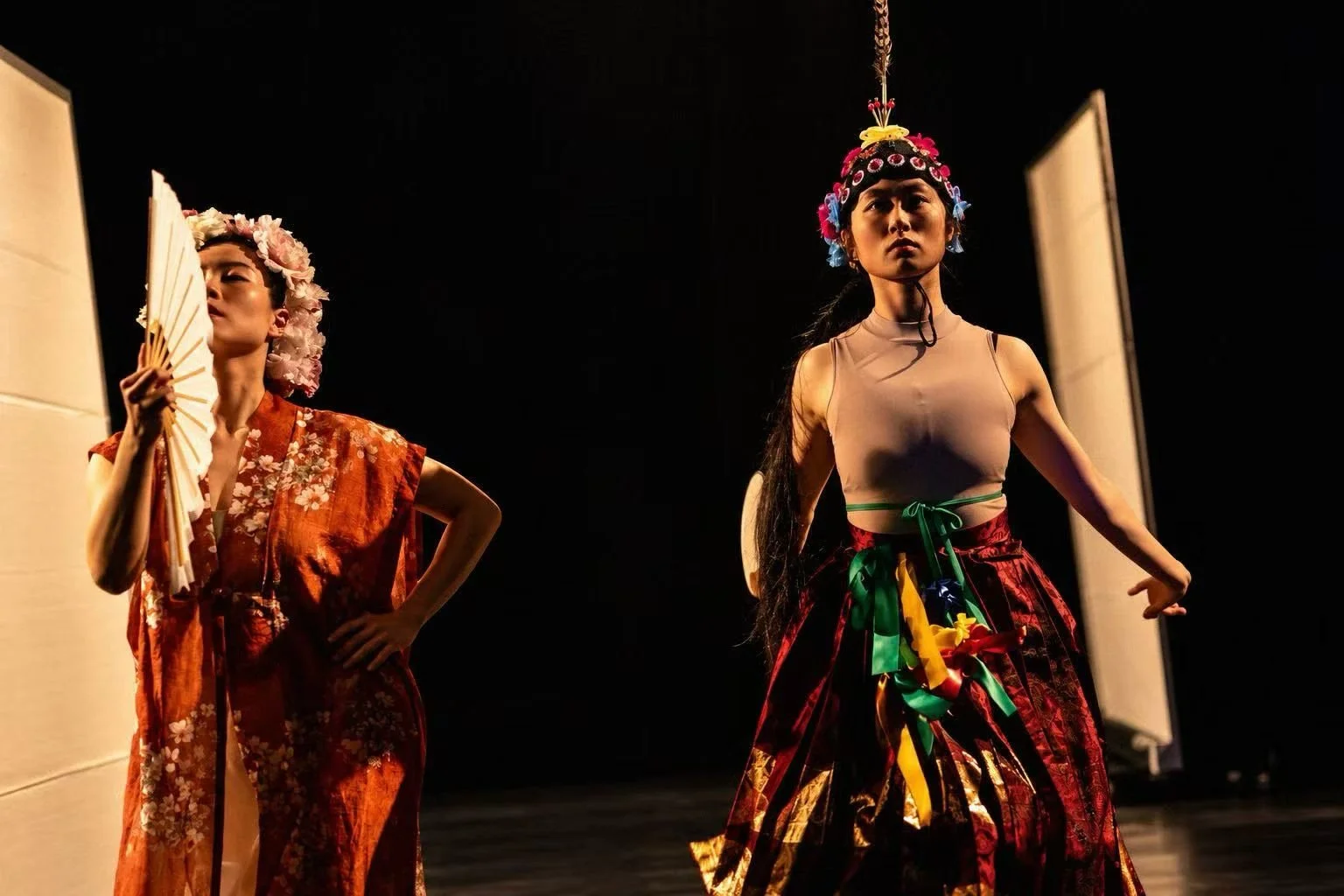
Image by Urban Artistry
That longing also resonated with something deeply familiar in Chinese storytelling. Across folklore, literature and popular culture, yao are repeatedly drawn towards the human world, and the desire to become human is a recurring motif. But what struck me here was that this longing seemed to exist before the yao even understood what being human meant, or why it was something to desire. It felt almost like an inherited impulse, carrying a quiet unease with their own identity as yao — a sense of wanting to become something else without quite knowing why.
What fascinated me, then, was the process that followed: the watching, mimicking, learning and absorbing of human behaviour, as though they were gradually discovering the very thing they had somehow already come to desire.
I especially loved the section where one holds a zhe shan (折扇, folding fan) and the other a tuan shan (团扇, round fan), mirroring one another through a delicate and playful exchange. The contrast between the two fans gave each body its own distinct visual language, while their movement seemed to travel between them — observed, echoed and subtly transformed from one body to another.
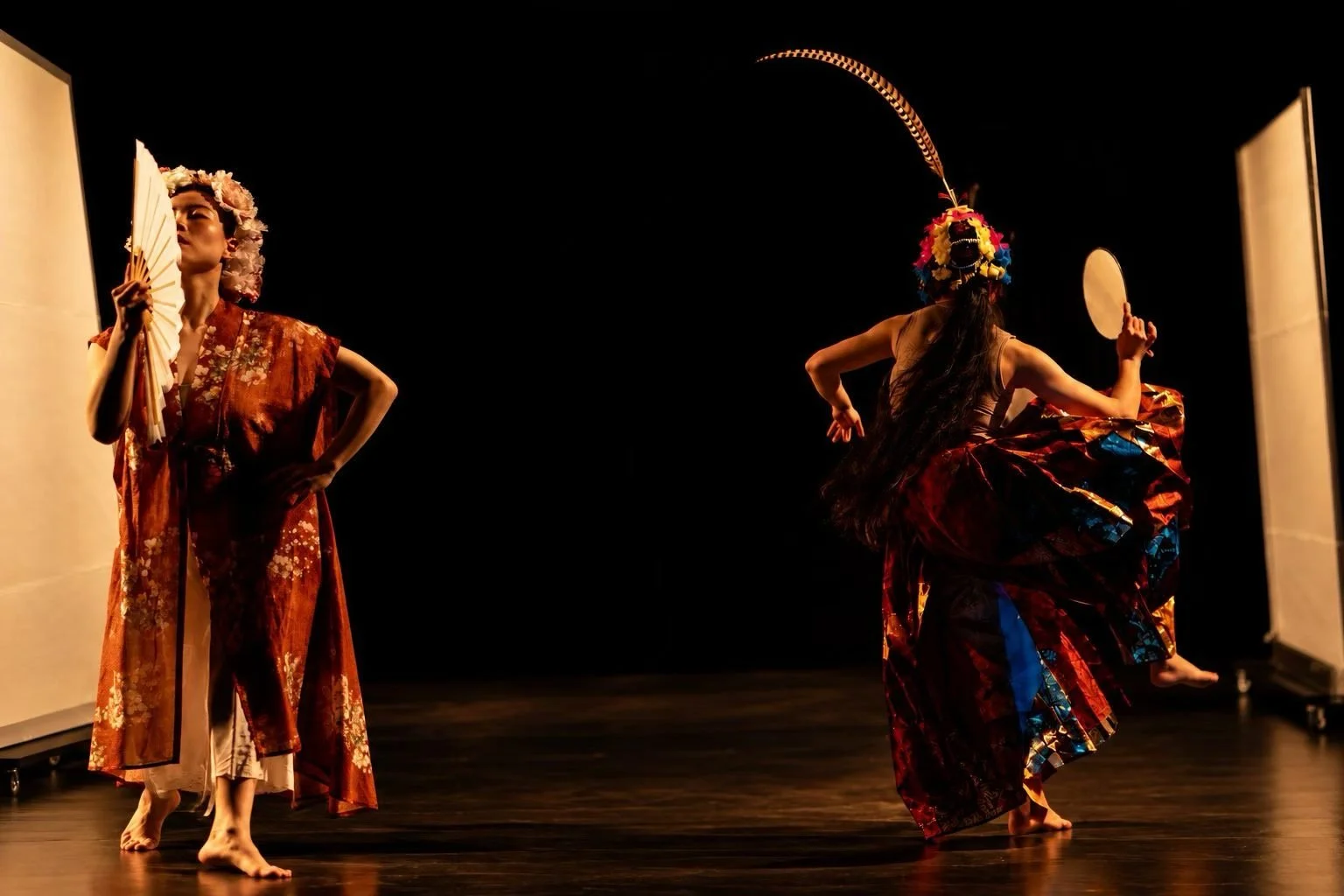
Image by Urban Artistry
As the metamorphosis approaches its climax, though, those boundaries begin to blur. You can no longer quite tell which parts have been learnt from others and which parts truly belong to the self. It reminded me of a young person entering society for the first time, learning its rules and figuring out how to live within them while finding a place of their own. It also made me think about entering another culture: how much do we adapt, how much do we absorb, and at what point does it become impossible to distinguish what came from others from what has become our own?
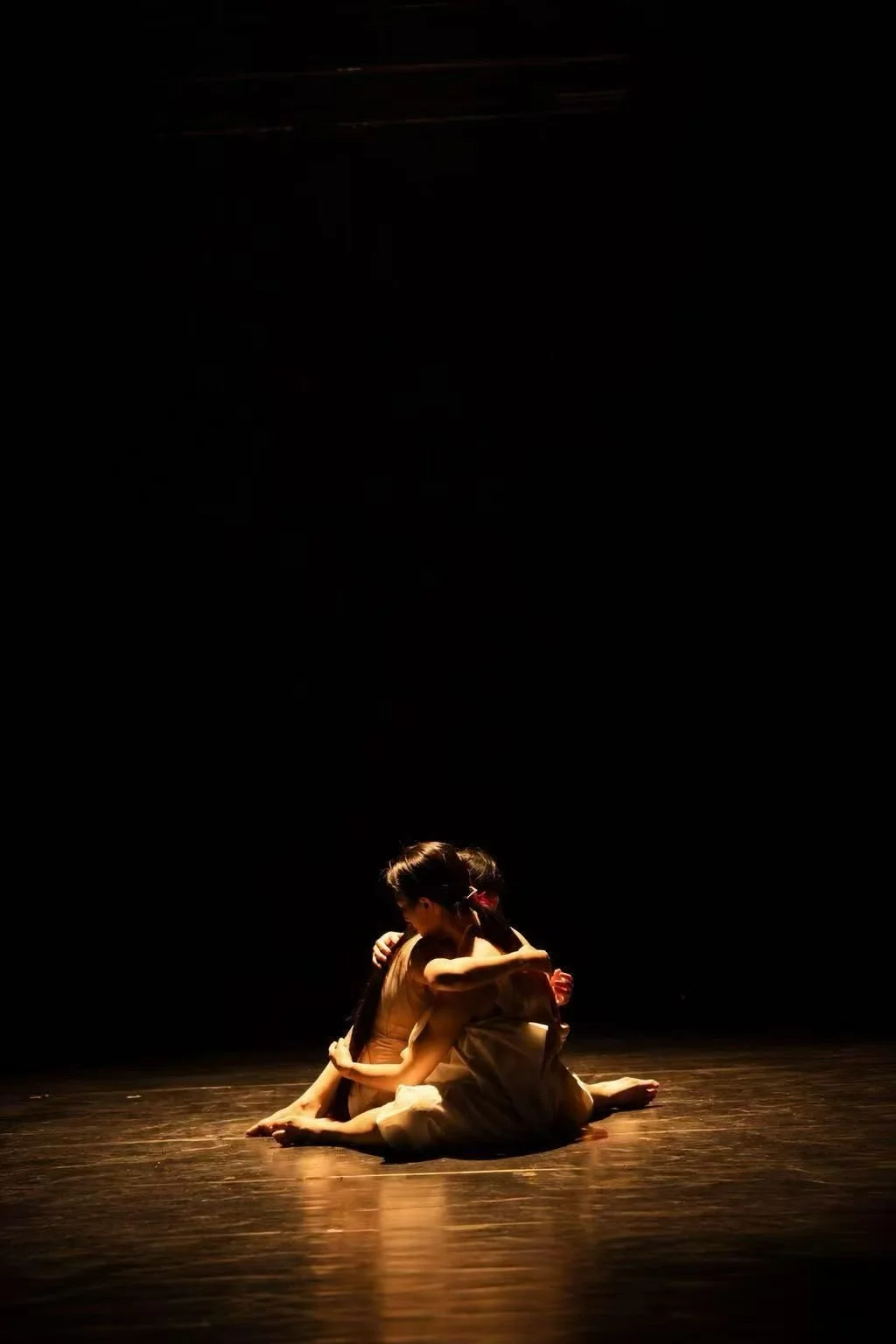
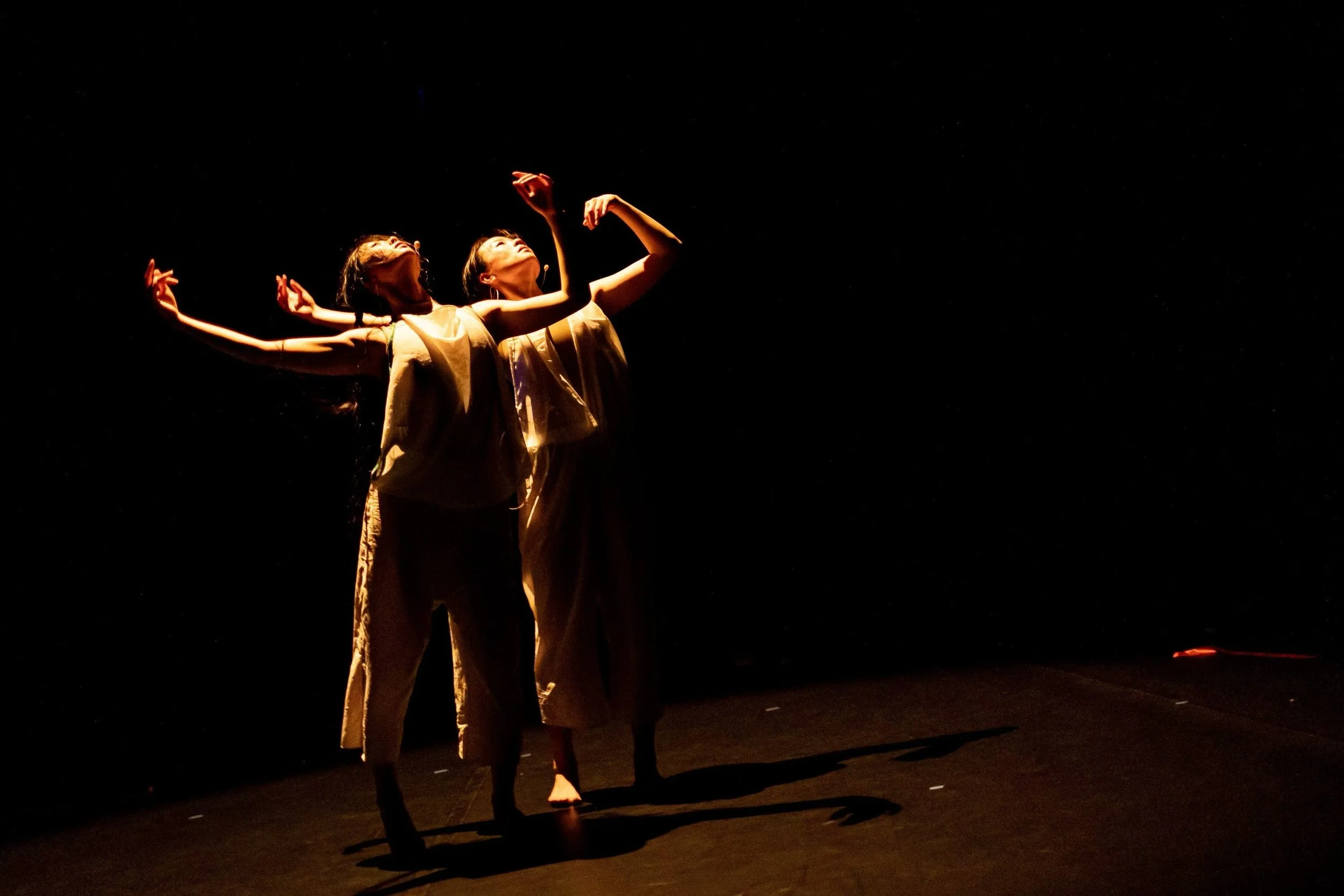
By the final scene, the layers of recognisable cultural symbols, costumes and adornment have been stripped away. What remains is simple clothing, two bodies, the self and each other. After all that imitation, accumulation and transformation, it feels like a return to something much more fundamental — a quiet questioning of who we are beneath all those layers.
I loved how open the ending was. That sense of liubai (留白) — deliberately leaving something unspoken, unfinished and unfilled — is itself deeply rooted in Chinese aesthetics. It leaves space for imagination, interpretation and reflection. So much remains unsaid, yet somehow has already been communicated. Those unspoken things that resonate between the performers and the audience seem to linger in the dimness, circling with the final mesmerising, almost hypnotic dance until the performers disappear.
It left me with a wonderful sense of yi you wei jin (意犹未尽) — the feeling of being left wanting just a little more, and that was precisely what made the ending so satisfying. The work is rich, but never overfilled; it knows when to stop and leave space for the audience’s imagination to continue. There is something distinctly Chinese in that restraint, too — shui man ze yi (水满则溢), “when water is filled to the brim, it spills over.” Sometimes it is the space deliberately left unfilled that allows a work to keep expanding in the mind after it has ended.
Another thing I particularly loved is that none of the Chinese cultural elements ever felt tokenistic. There was no sense of placing recognisable symbols onstage simply to announce, “this is Chinese”. Instead, the work felt like it came from a young generation of artists who genuinely know this culture, have grown within it and are thinking deeply about how to use, question and express the cultural forms they have inherited. The Chinese-ness is everywhere, but it is embedded rather than displayed.
I also really appreciated that they kept the spoken text in Chinese rather than translating everything into English. Some of those delicate expressions would inevitably be lost in translation. The fact that the text moves between classical Chinese and contemporary Mandarin adds another layer to the work — another movement between past and present.
Together with the piying-inspired opening, it creates a beautiful sense of an old story being told anew. By the final contemporary scene, it feels as though we have travelled from an inherited story into a new generation’s interpretation of it: an old story questioned, reconsidered and given new life through young Chinese artists.
Perhaps that is what I found most moving about the work — its sense of cultural continuity. Culture is not something static that we simply inherit and reproduce. It keeps transforming as each generation encounters it, questions it, sheds parts of it, carries other parts forward and makes it their own. Deeply rooted in Chinese culture, In Green, In White reflects a living culture that continues to evolve, transform and become through each new generation.
Creative Team
Choreographer: Weichen Cui
Performers: Weichen Cui and Jiawen Feng
Sound Design: Monica Lim (special thanks to Yu-Tien Lin and Mindy Meng Wang) and Kai Luan
Lighting Design: Tom Vulcan
Visual Design: Haocheng Zhang
Costume Design: Fengfeng Wang
Set Construction: Ricardo Piscioneri (Urban Handyman)
Lighting operator: Esther Li
Sound operator: Tracey Chen